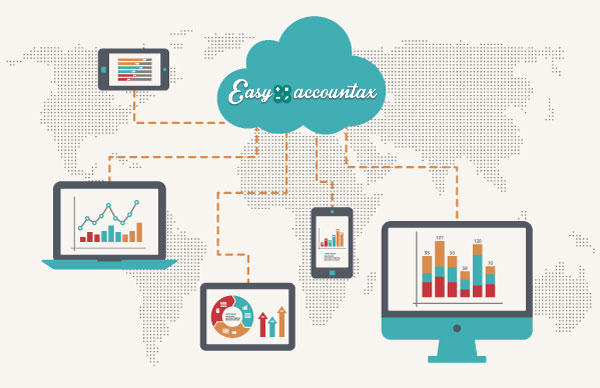
Easy-GST is a GST ready accounting software to manage your accounting, Inventory, Payroll, Billing, and Banking, File your GST returns and many more features.
Feature to save your time and help you, Keep your business finance on track.
Easy Invoice: Easy invoicing software for your business. Create Professional invoice and customize them using your company logo and color theme.
Financial Report: Get real time view of all your company financial through Easy Reporting. Easy has lots of reports to give you an overview of your company’s financial health and adding more time to time.
Assets Management: Manage all your company assets from easy. Easy does all back end work for you and creates required journal entries so you don’t need an expert knowledge to manage your company assets.
Payroll Software: Easy payroll is everything you need to automate your payroll. Create employee information at your fingertips. It provides all necessary reports for HR to manage employee time and attendance.
Multi-Currency: Multi currency lets you create invoices and bills in any currency. With multi-currency option, you can easily generate bill and invoice in different currencies.
GST Return: Easy is now GST ready. Easily file all your GST returns with one click. As you already have your invoices and bills entered in easy we will automatically submit them to GST server. Upload GSTR1, GSTR2 and GSTR3 through Easy GST accounting software.
Secured Data: Easy use SSL to securely transmit data between your browser and easy server.
Inventory Management: Get real time stock valuation with Easy inventory. Your inventory is continually updated on your balance sheet to track real time.
Dashboard: get a quick glance at your business finance. Easy GST dashboard gives you an overview of your business finance. Get real time cash flows, bank balance, invoices & bills etc…
Time and Billing: Easy to use time sheet module let your employees create their time sheets easily without spending a lot time.
Easy EPOS for retails outlets: Android based wireless EPOS for restaurant & supermarket. The dashboard gives you an overview of your payment history, receipts, sales analytics history, inventory etc…
Bill Expenses: Easy GST is business expense management software. Whether it’s a business expense or personal expense you can track all your expenses right from easy.
Banking: Manage all your bank accounts easily, and keep them up to date. Connect easy to your bank account or import your bank statement into easy. Easy offers auto matching and rule based reconciliation to make it even faster to reconcile your bank.
Time Tracking: Record every second your team spent on a project. With our flexible time sheet reporting, prepare report as per your requirements.
Try Easy GST business accounting software for 7 days free trial. Check out the Easy GST website to get more idea about the software.
The Coronavirus pandemic has led the Indian government to issue strict self-quarantining, social distancing, and lockdown guidelines to monitor Covid’s further spread—19. Although these steps were taken to ensure Indian citizens’ protection and health, they definitely affected the small-scale market. The sectors that are hardest affected include the Food and Beverage (F&B), the automobile industry, electronics, and textiles. Restaurant dining, for example, is facing an estimated decline in business of 30 – 35 percent given the high proportion of fixed costs in the foodservice sector, such a rapid decline in sales could lead to substantial losses for restaurants in the near future. Likewise, with the outbreak of COVID-19, the automotive industry, which was already experiencing a decline in overall demand, would slide on.
Companies walk on a tightrope; on the one hand, they have to ensure the health of their employees, but on the other, they can not afford to delay in accounting and conformity. The pandemic has caused an ongoing economic crisis. Nevertheless, one effective business leader is one who can effectively maneuver through these adverse twists and turns.
It can be a challenge to decide whether to allow your team to work from home, particularly if you don’t have the right infrastructure in place to support their work and keep everyone connected. The complete framework will provide your business with the new cloud-based platform to promote remote work and ensure that your employees are secure, healthy, and efficient in the midst of the current pandemic.
Adopting next-generation technology will allow your company’s desktops and applications to run in the cloud and ensure continuity of business no matter where you are. Reliable Internet connectivity is what you need, so you can connect your company remotely, so make data-driven decisions from anywhere, anywhere.
What Resources & Benefits You Can Avail During Covid-19 Crises
1) Taking help of the technology
Automation is one of the most useful technologies available to keep your teams working efficiently from home and smooth running of your company. You should adapt to changing demands with automation, and automate manual processes so that the “WFH” team should cope with the current scenario. Remote onboarding of staff, receiving customer notifications, and monitoring employee status reports are perfect automation scenarios.
2) Work from home opportunity
For larger businesses trying to make tough choices such as workplace layoffs, the primary alternative may be to slash the wages of the better-paying employees and seek to retain those who can least afford to lose their jobs. Nonetheless, when the time comes to make a difficult decision, it is best to do so with sensitivity, search for policy guidelines, and provide additional incentives if and when necessary. Such implementation should only be carried out once and not in steps so that it does not impact the morale of employees. You may ask them to participate remotely using the new technologies to operate from home using various software and tools.
3) Cloud-Based Accounting software
If there’s something because of the pandemic that has suffered the hardest blow, then it’s accounting and finance. Every day, the economy is going down, and there is not one single country that has been spared for these crises. In these circumstances, we must ensure that every single activity is carried out without endangering the lives of the people. For this reason, accounting software is very important when working for a company remotely. For compiling the accounting operations from your home, you can view all the bills and information only.
During these times, it is important to stand together as one and support one another. Know that keeping healthy indoors is the focus right now. Through tough times some of the best ideas are made, so don’t lose hope and keep your spirits up!
The government must issue refunds to companies for products and services tax paid on orders that consumers have canceled due to the national shutdown placed to contain the latest coronavirus outbreak, as requested. It will benefit businesses who would be forced to refund all payments made to them, including vat.
According to Rajat Mohan, a partner at AMRG & Associates, companies used to change the excess GST charged for other new bookings, but now they will be liable for a refund, which will be a big relief. Hospitality and tourism, leisure, culture, media, advertisement, and aviation are some of the sectors that have been most impacted due to COVID-19 and that stand to benefit.
Upon the emergence of the Coronavirus epidemic, the global economy is forced to take a big step back. The Government of India has taken concrete steps to resolve the citizens’ and company concerns. Union finance and corporate affairs minister Smt on 24 March 2020. Nirmala Sitharaman announced significant relief steps on enforcement issues relating to laws and regulations across various sectors. Such announcements have focused in particular on the fields of Income Tax, EPF, ESI, GST, Customs & Central Excise, Corporate Affairs, Insolvency & Bankruptcy Code (IBC), Fisheries, and Banking and Trade.
A recent Rajasthan GST Advance Ruling on Goods and Service Tax Liability on Company Managers’ Remuneration has come up for discussion. The reasoning in this decision sets out a legal theory that relies on company law in terms of a director’s roles and responsibilities. Such interdependence on tax law definition isn’t unusual. In this case, the conflict was over the essence of the remuneration received by the director of a company and its taxability under GST.
It is expedient to mention those aspects of the GST law before diverting into the conflict. There is an absolute legislative exclusion from GST of compensation that an employee gets for their services. There is also a particular clause, albeit not under the GST law as such, but under a subordinate notice, which specifies that on the reverse charge basis, the GST responsibility for the services rendered by a director is with the recipient organization. Under the Service Tax Act, a similar clause prevailed.
GST Filing complications due to nationwide Lockdown
Regardless of the lockout and COVID-19 impact, all organizations and businesses are following up on work from home. Yet the modern trend of operating from home brings with it a few obstacles for start-ups and even for bigger corporations too. One of the problems that corporations face is that workers responsible for filing tax and GST returns and producing e-way bills can not access their office systems.
The GST reporting process is complicated as it includes consolidating cost bills and transactions from different agencies, validating and entering into accounting systems, calculating the amount of tax due from sales, and more. And, it usually occurs in the last week of the month, which in the current situation makes it impossible for a lot of businesses to handle and file their returns.
Small companies that are unable to operate from home, and where taxpayers are required to be on the premises to comply, are likely to be affected. Some employees can work at the premises for a short period of time for smooth product movement and e-way bill generation.
There are several companies that help their customers stick seamlessly to cloud-based applications that can be accessed anytime, anywhere. When data is applied, the program can automatically produce reports and create reconciliations. These are unique situations, and we hope that the government will be able to resolve those issues.
Latest GST Updates
GST returns filing date is being extended to 30 June 2020 for March, April & May by the government.
According to the government, there is no Late Fee, No Penalty for the businesses with a turnover of less than Rs.5 crore.
The last date for opting for composition scheme extended to 30 June 2020.
Taxpaying is one of the important part of your duty as a citizen of your country, the tax you pay to your govt comes back to you in the form of services which is made better for your conveniences such as good roads, safe public transports, availability of nearby shops for basic essentials and many other things. It is a big responsibility of all the citizens to pay their taxes honestly because the tax you pay is used for the basic essentials which you need in life. If you won’t pay taxes, the govt won’t be able to raise funds which can be used in public betterment which include the things done for the economically backward class and the unprivileged section of the society which means the developmental process will be slow down.
Hence, it is important to behave like a good and honest citizen because by doing this you are not only doing well for your nation and its people but also you will do well for you. Whenever a govt policy reaches to the needy people they bless the govt which surely come to you once. So, no matter if you have just started earning or have been earning, be sure to pay your taxes regularly and honestly.
For those who have just started earning and want to become a taxpayer, then first you have to do a little research in order to have some knowledge to save some amount. Hence, let us get into the details:
Know your different source of income:
A taxpayer pays the amount of tax which he actually earns which is a part of him/her income, so before getting into the taxpaying first you need to know about the sources of income you have. There are various kinds of income sources which include the salary, the property rent you get, various capital gains such as share market, mutual funds, fixed deposit or so and the business & profession income. Each type of income has a definite percentage of tax which is to be paid according to it.
Income slabs according to the income of an individual:
Though people who have annual income above 2.5 lakh only have to pay taxes and the people who have their annual income lower than this are exempted from paying taxes. The tax percentage depends on the annual income you have every year like if you have annual income from 2.5 to 5 lakh then you need to pay 5% of it, again if you earn from 5 to 10 lakhs then you need to pay 10% of it and if you earn above 10lakhs then you need to pay 20% of it.
Types of rebate you can in taxpaying:
Yes, tax-paying honestly is good but like the discounts you have in online shopping, you get the rebate in tax paying too depending on the policies you have. Like if have health insurance or life insurance or a home loan or any other you can have a rebate in your tax amount, also you can have the rebate if you have a study loan or education of yours or your’s children which you are currently paying. Make sure to read all the important notes before signing any documents since it is advised to read all the terms before signing something.
The declaration of the other gains:
It is important for you to mention all the income gains from other sources because it can be inconvenient for you in any case those incomes come up to the surface. For example, if you have gained money in mutual funds or in share market or in your FDs, you need to mention that in your tax declaration.
Documentation is one of the important things which you need to do with a good mental state since any missing documents will increase your visit to the tax office. So, in order to make a smooth tax payment, make sure to collect all the necessary documents which are also true and 100% original.
Documents which you will require are:
Address proof
Identity proof
PAN card (Permanent Account Number) linked with Adhaar Card
Investment related documents (to avail the redemption in tax amount)
Form 16 if you are an individual (this acts like your TDS certificate which proves tax is deducted from income)
Loan documents such as home loans or education loans if any (to avail the redemption)
So far all the information which you need to know before paying your taxes if you are doing it for the first time, this can also be educational for the people who already paid it before because you may not be done correctly earlier. Also, if you have decided to pay the taxes then you need to pay your taxes till JULY 31, 2019.
If you own a shop or any other commercial establishment in India then you must apply for a Shop and Establishment License within 30 days to the Chief Inspector. You can also apply for the license by filing an application in your respective state.
The application form must contain the name of the employer, address of the establishment, the name of the establishment, the category of the establishment, number of employees and other admissible details as desired.
What is the Shop and Establishment Act?
Shop and Establishment Act regulates the condition of work and enlists the right of employees in an unorganized sector. This Act is not restricted to the commercial establishment but also applicable to societies, charitable trust, educational institutes and any other establishment which runs on the motive of earning a profit.
The Act also offers the obligations of an employer. The very first requirement is to obtain a shop act license from the concerned authority under the Act. Areas include working hours, holiday, overtime, leave policy, work policy, etc.
The Act comes under the authority of the Department of Labor and it supervises and administers any establishments wherein any trade, business or profession is carried out. The act keeps a close eye on commercial establishments and also the working of the societies, printing firms, educational institutions and other premises which undertake banking, insurance, stock or share brokerage.
In India, The Shop and Establishment Act may slightly differ from state to state as each state follows their separate operation.
The following are specific aspects of the Shop and Establishment Act :
Hours of work
Interval for rest and meals
Prohibition of employment of children
Employment of young person or women
Opening and closing hours
Close days
Weekly holidays
Wages for holidays
Time and conditions of payment of wages
Deductions from wages
Leave policy
Dismissal
Cleanliness
Lighting and ventilation
Precautions against fire
Accidents
Record keeping
Information that needs to be furnished for Shop and Establishment License Registration:
Name of firm
Address of Firm
Name of Manager, if any
Nature of Establishment like Nature of shop, Like Clothing Store, Furniture Store
Number of Employees in the Establishment
Day of Holiday, etc
What are the documents Required for Shop and Commercial Establishment Registration?
Aadhar Card / Voter Id / Driving License / PAN
Photo of Owner
Photo of Shop along with Owner ( you can Click with Mobile Phone as well )
Rent Agreement, if Rented
Electricity Bill
Some important points to keep in mind while applying for shop act license online or offline
After obtaining the Registration Certificate if there is any change to be made then the same should be notified to the Chief Inspector.
Registration Certificate to be obtained within 90 days of the commencement of the business
Placement agencies providing domestic services to also be mandatorily registered under the Shop and Establishment Act
For any reason, if you fail to obtain shop act license under the act then you need to pay the penalty for the same.
Conclusion
In India, The Shop and Establishment Licence is mandatory to display while carrying out day to day business. You need this license during all the stages of Business registration. Make sure you have this license for your business.
Recently the Finance Minister Mr.Piyush Goyal announced the much awaited Union Budget in the Lok Sabha, which has a lot in store for the middle-class group and little for the richer community. Here are the highlights of the rolled out interim budget 2019:
Reduction in tax slabs:
The main gain from the budget 2019, is the relaxation from tax burden for salaried and pensioners. Here’s a look at who gains and by how much:
The proposed increase in standard deduction has increased from earlier Rs. 40,000 to Rs. 50, 000. Here’s who saves by how much in various income groups:
Income Groups
Tax Saved
Income between Rs. 2.5 lakh and Rs. 5 lakh
Rs. 1040
Income between Rs. 5 lakh and Rs. 6 Lakh
Rs. 15, 080
Income between Rs. 6 lakh and Rs. 10 Lakh
Rs. 2080
Income above Rs. 10 Lakh
Rs. 3588
The bigger gainers are the individual payers earning upto 5 lakhs a year who are given a full tax rebate in the proposal. The finance minister said, “This measure will give an exemption to around 3 Crore middle-class taxpayers.”
If you come under income range of up to 6.5 lakh rupees, you are exempted filling tax, if you have proper investments in equities or provident funds.
Tax slabs for individuals with an income over 5 lakhs remain the same
Tax on rent from second vacant houses has also been eliminated for house owners.
Increase in the gratuity limit from Rs. 10 Lakh to Rs. 30 Lakh
Other key points to be noted:
Under Section 80(i)BA – Benefits for all the housing projects will be extended for one more year till the end of 2019 -2020
SME’s with almost Rs. Crore Annual turnover or less will be allowed to return quarterly returns
There has been a significant reduction in the GST for poor or middle-class consumers. A relief of almost Rs. 80,000 Crore is given with daily use items falling under 0% to 5% tax bracket.
MSME units are given 2% interest subvention on a loan of Rs. 1 Crore
Rashtriya Gokul Mission gets Rs. 750 Crore allocation in the current year
Increase in the hydrocarbon production to decrease imports
Explorations processes are being reconnoitred and changes are being implemented in the bidding procedures
Benefits the country has witnessed so far:
Since the implementation of the GST, India has become popular welcoming trades, has become one common market, inter-state movements have become faster, implementation of e-way bills has improved the ease of doing business.
In the coming years, almost all the GST and IT returns will be verified automatically by anonymized tax systems without any intervention by tax officials.
The data and voice calls are by far the lowest in the world
The 4R approach has been implemented to ensure clean banking – Recognition, Resolution, Recapitalized, Reforms.
Fiscal Deficit has been reduced to 3.4%, and CAD (current account deficit) is likely to be 2.5% of GDP in the current year
End Notes:
After the announcement of the budget, PM Narendra Modi said, “This is just a preview of the budget, which after the elections, will take India on the path of development. The plan of India is to become a 5 trillion dollar economy in the coming 5 years and almost 10 trillion dollar economy in the coming 8 years.”
By 2030, Finance Minister has set out a vision including infrastructure, employment, clean rivers, and pollution free nation.
SaaS refers to a short-term of Software as a Service is implacably growing term for assisting and delivering an online application to the customers. It is a highly successful business model for online application development where the data privacy and protection is always in doubt. Before jumping into data protection and how it relates to SaaS business owners. Let go deep into what SaaS is and why data protection is so important.
Software as a Service (SaaS):-
Software application were used to be purchased wholly and completely which is downloaded directly to a device or tangible copy, now with growing technology of cloud computing it is been accepted across the globe to create a cloud-based application and charge as per subscription. With an emerging technology, the user can avail the functionality of an application from any location and any device. This business model is accepted and created with the ease of accessibility for the user.
While looking towards this business model the main concern for both companies and customer is about the trust for the data protection. The customer using SaaS will be entrusting a third-party provider with business processes, confidential company data/ information.
The customer needs to be aware of the data accessibility and data protection document from the SaaS provider. The access can be with the employees of the company while they have to ensure the security of the data. The data can be on both ends i.e. company & customer so it is important to be on track with all the privacy legislation to make sure about the collected data from the customers remains protected.
The functionality of the original product may be similar to SaaS product however the security of data and information are very much to be different. While the SaaS platform owner won’t be making copy or installing the software on its own device, but he must be acquiring the right and permission to access it as a service instead. To ensure client about his data is protected with us by following the GDPR.
The General Data Protection Regulation (GDPR):-
The data protection case scenario came into existence on May 25th 2018. While the legislation was designed by European Parliament back in 2016. With the evolving technology in computing, the previous 1995 data protection was outdated so it was necessary to have a revised data protection legislation likewise an advanced data legislation with the new technology. EU is always about their high standards data protection.
All the vendor across the globe needs to be aware about the requirement and are in complete compliances with them. The GDPR are applicable to the international companies that collected the data of EU citizen’s. Which includes the companies that are in EU soil and overseas companies who are offering services to EU clients.
The vendor has to comply with the GDPR ACT if they want to conduct their business with EU citizens else they will fall under the non-comply penalty.
This penalty includes administrative fines that can reach up to 20 million Euros or 4% of the company’s global annual turnover. The greater amount will be considered.
To avoid such penalty the company should follow the necessary GDPR requirement mentioned in the link.
A vendor or any business to become GDPR compliances needs to consider:-
Data Mapping:-
The first step that needs to be checked is how the data moves in your organization. Documenting the way that the information flows in your company by making an inventory helps you demonstrate that you comply with GDPR.
Mapping the data will help any organization to track the problems of GDPR compliances.
If the data processes rely on a lawful basis then only data operations can be conducted. The dependency will be toward the lawful basis of the personal data being processed and the purposes for processing.
Privacy Policy:-
Users will first look for privacy policy and check the GDPR compliance. Where you need to provide concise information and easy to understand.
Business changing model GDPR. The company and client both need to understand the importance of the data privacy and needs to understand the principals of GDPR and procedure being implement for compliances.
Steps to be considered:
Mapping for data performed by data processors
Transparency of data with the user who uses to visits Application.
Before acquiring, give informative notice to your employees, vendors, and clients as per GDPR.
Configure your complex method to use explicit consent when processing sensitive personal data on your website.
Data Controller should always co-operate with the Supervisory Authority regarding there task.
An observation in the data processor is mandatory to keep a record for proof consent and security purpose.
Required an observation on other GDPR compliant vendors since GDPR has no formatting rules to be followed.
A formatted security procedure needs to be installed in order to gain report or detect/investigate data breaches internal as well as external. Where a complex data breach set-up is demanded a better outcome. However, if there is any data breach then required to report within 72 Hours of Turnaround time to Supervisory Authority unless the data was encrypted.
Since the data protection is not a one-time project is a continuous process to collect the data and ensures the protection of the data and its proper use.
A Complex data breach mechanism installation.
All the procedure should in compliance with GDPR.
Employee Customer and outliers contract should be updated.
Secure data through the legit organization and technical measurements.
The data transfer with any other company/vendor is GDPR compliant or not.
Optimization toward GDPR
Talking about GDPR, the vendor has to make aware to customers or visitor/users about GDPR compliant company with website optimization as per GDPR guidelines.
Opt-in form:– An legit format of getting the business information. An Info-graphic with the GDPR compliant is the best thing to start with concurrently following with the guidelines of Email Service Provider for GDPR, While some of the vendors go for double opt-in in order to avoid any consequences, but single opt-in works.
Cookies Consent:- While visiting ant GDPR compliant website will gather cookies to gain some information of the visitors where an short info has been provided to the visitor in order to there acceptances.
The business/vendors implement cookies in multiple ways, and the GDPR references to cookies don’t clear things up. The Functional cookies are used for a session, but you need specific consent to set a cookie to track the user. Since there is an update with GDPR is ePrivacy is in news for the more advanced form of protecting data and the use of cookies.
Other GDPR Compliant issue that needs to be considered which are important as well.
1) Data Transfer and disclose agreement:- Data transfer is a very important case while transferring the data outside of EU/EEA by data processors, where an approval is required from the companies authorized person. This Rule is also applicable to all the vendor who is in subcontract part of the business or service they provide.
2) Data Protection Impact Assessments (DPIAs):- The organization involves in high risk of data processing are suppose to fall for DPIAs likewise a new technology is implemented/installed or similar to large-scale monitoring to public data.
3) Legitimate Interests Assessments (LIAs):- LIA’s is the best practices exercise deployed by privacy specialist in reference to the situation where data controller looks for the legitimate interest likewise marketing operations. This exercise can consider legit as long as data controller can pursue it with reference to complies with data protection and other laws.
4) Data Protection Officer:- In order to run the GDPR compliances perfectly a Data Protection officer. An organization needs to hire DPO’s including public authority, organization, whose roles for this opportunity will be his/her involvement in the regular systematic monitoring of users personal data subject to a small and large-scale organization.
5) Processing Children’s Data:- Since GDPR has a serious regulation for acquiring data to children under 16 Years. In regards to this organization are assuring the data is it relates to checking of individual ages and gather consent of there guardians.
Mentor and Audit:-
Every business must acknowledge there relevance organization that the acquired data is protected by the law and they should be transparent with the same. Talking about transparency all the organization should define the scope of storing the specific data.
Collection the data should be in relation to the query or its need, no-irrelevant data should be stored. The Data shouldn’t be shared for non-relevance use or to any other organization without back checking it. Where it has to protect as well from hacking and even deleting it by the laws.
Moving towards GDPR there is a lot of space for improvement when it comes to protecting an individual. In the case scenario, the new beginning of ePrivacy Regulation will bring even more transparency and good enough to monitor and audit data on the regular basis.
Also below is the graph how companies are moving toward the GDPR:-
There is plenty young software providers learnt from users’ experience, and developed in such way an innovative approach in solving common business problems. Despite of being challenged to reach out to diverse audiences and promote their service, novice systems are lucky enough to have competent software reviewers on their side, and one of those is exactly FinancesOnline.com.
The popular B2B directory helped thousands of companies throughout the years pinpoint the ideal software for their needs, paying special attention to fresh and promising apps that meet their quality criteria. This time, the distinguished product was exactly our Easy Accountax, a new generation accounting software that pleases users with total finance visibility. The platform’s experts examined closely the unique feature suite we offer, and concluded that our system should be distinguished with two of their top productivity awards.
That’s right – Easy Accountax now holds the 2017 Rising Star Award and the Great User Experience Award for accounting software, both reserved for premium performers that established excellent traction with their users. These awards are also in place to confirm that Easy Accountax is a reliable system, and offers a friendly interface users take no time to manage like pros.
Impressed by the system’s unique capabilities, experts also discussed it on their top list of accounting software for 2017, where they highlight how easy it is for accountants to create and organize their clients’ accounting portfolio and be in total control over access. They also recommended our system because of its powerful collaboration module, SSL encryption and secure storage of data, and the affordable pricing plans that suit even small firms and sole accountants.
“Starting your own business is like riding a roller coaster. There are highs and lows, and every turn you take is another twist. The lows are really low, but the highs can be really high. You have to be strong, keep your stomach tight, and ride along with the roller coaster that you started.”
Every business owner wants to turn their business into a successful business. In this article, you’ll find 5 important things which you should know to grow your small business or startup in 2017.
Take a look:
1. Make Customers Feel Great
One simple thing can make your business successful – Knowing your customers and provide them the best experience.
“Every business start with a trusted customer”
It’s your prior job to take care of your customers and keep them happy.
“Building a successful brand isn’t just about ROI; it’s also about building authentic relationships with people.” — Ryan Holmes
Understand the pain point of your targeted audience and come up with a solution.
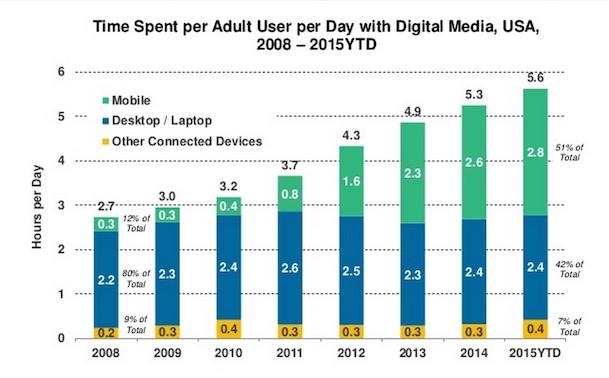
2. Importance of Digital Media
We live in the digital world. You MUST understand the importance of digital marketing or online marketing.
As Bill Gates said, “If your business is not on the internet, then your business will be out of business.”
Online marketing is the best and cost-effective way to advertise or promote your business.
54% more leads are generated by online tactics than traditional paid marketing.
The U.S. spent $59.82 billion on digital advertising in 2015 and spending is expected to reach $113.18 billion in 2020! (Source)
There are some effective digital marketing channels available out there:
Search Engine Marketing
Search Engine Optimization
Content Marketing
Social Media
Email Marketing
Video Marketing
Mobile Marketing
CRM
3. Marketing Automation
Marketing automation is the new trend in marketing and tech industry.
For a small business – Time is Money.
It allows you to automate and measure your marketing tasks. It will help you to save your time, increase efficiency, generate leads, segment your audience, nurture your leads, measure investments, and improve your marketing ROI.
You can optimize your email marketing campaigns and your social media posts (and campaigns).
4. Cloud based (On-demand) Services
On-demand or cloud based services will improve access to small businesses and new startups.
We live in the cloud. On demand service like legal services, website creations, cloud accounting and financial software, cloud computing, marketing tools and more – make our life easier and allow us to access a business from anywhere at anytime.
If you want to work faster and smarter the cloud software is the great way to improve your business efficiency.
“Businesses are rapidly embracing artificial intelligence to gain a competitive edge and stay relevant to consumers as brand engagement will be reimagined next year.”
80% of respondents believe AI improves worker performance and creates jobs. (Source)
AI has become the part of our daily life. AI used in banks and financial systems, medical science, gaming zones, ecommerce chatbots, messaging apps, etc.
AI can help you to increase your business reach,
So what do you think about these trends? Do you have anything to share? Please feel free to contact us.

 Assets Management: Manage all your company assets from easy. Easy does all back end work for you and creates required journal entries so you don’t need an expert knowledge to manage your company assets.